



Genesis
The current Department of Electrical and Computer Engineering at the Faculty of Sciences and Technology of the University of Coimbra traces its roots far back in time, through a continuous evolution aligned with the cultural and social demands of the University of Coimbra and Portuguese society.
The merger resulting from the decree with the force of law issued on April 19, 1911, which united the Faculties of Philosophy and Mathematics created during the Marquis of Pombal’s Reform, gave rise to the Faculty of Sciences of the University of Coimbra. The preparatory courses for admission to the Faculty of Engineering of Porto were established and regulated by Decree No. 24396 of August 22, 1934. Until then, the Faculty offered courses that qualified students to later attend the Technical Faculty of Porto and the Instituto Superior Técnico of Lisbon.
The need for a Faculty of Engineering at the University of Coimbra was first presented to the Faculty of Sciences’ Academic Council on April 27, 1960. The professors on the Council were divided: some supported the creation of a separate Faculty of Engineering, while others advocated for integrating Science and Engineering courses within a single faculty. The latter view prevailed, and Decree-Law No. 259/72 of July 28 established the Faculty of Sciences and Technology of the University of Coimbra.
The third year of the Electrical Engineering degree — the Engineering preparatory courses at the time covered the first two years — began immediately in the 1972/73 academic year. The Faculty’s leadership made it a priority to meet the essential and strategic requirements of Electrical Engineering, laying the foundation for the Department.
It implemented a doctoral training plan to prepare future professors, hiring young and talented graduates who were promptly sent to pursue their Ph.D. studies at prestigious foreign universities. The day-to-day management of the Department was entrusted to a Ph.D. holder, with sufficient delegated authority to ensure the smooth development of its activities and plans.
Facilities were found at Quinta da Nora, which, although temporary, were adapted to meet the Department’s immediate teaching needs. With the recruitment of administrative, technical, and support staff, all the necessary conditions were in place for the Department’s establishment and growth.
Maturation
Let us now briefly and succinctly describe the evolution of the Department over the last three decades of the 20th century. The period following the April 25th Revolution was marked by profound transformations throughout Portuguese society. The university institution was, perhaps, the one where ideological changes — reflected in power structures and behaviors — had the greatest impact and scope. Naturally, the plans previously established for the Department were questioned and modified.
Engineering moved out of the Quinta da Nora buildings, which had been assigned to the Industrial Institute of Coimbra. The doctoral training program experienced some disruption but was soon resumed and strengthened. From the late 1970s onwards, the Department’s development progressed steadily and sustainably across all its areas.
The number of faculty members increased consistently. From a single Ph.D. professor in the early days, the number reached 23 by 1995, before the creation of the Department of Informatics Engineering. When the Electrical Engineering degree program was first established, not a single faculty position was filled; by the end of the 20th century, the faculty roster was nearly complete, with 6 full professors and 5 associate professors. The non-teaching staff grew from 5 employees at the beginning to 23 by the end of the century.
The undergraduate degree in Electrical Engineering, initially with only one specialization track, enrolled third-year students for the first time in 1972. Its first 41 graduates completed the program three years later, in 1975. The degree later expanded to offer three and then four specialization tracks.
In 1984, the Department launched the undergraduate program in Computer Engineering (Decree No. 401/84). The first master’s program offered by the Department was the Master’s in Electrical Engineering Sciences, whose first edition took place in 1983. Later, this master’s program was divided into two separate programs: the Master’s in Computer Science (Decree No. 187/82) and the Master’s in Electrical Engineering Sciences (Decree No. 33/83).
Order No. 63/SCCS/83 granted the University of Coimbra, through the Faculty of Sciences and Technology, the right to award the Ph.D. degree in Electrical Engineering. The first doctoral degree, based on internally conducted research and supervision, was completed in 1985.
Both the Electrical Engineering program and the Department itself — first as an informal structure, later as a formal and statutory one — evolved over the years in accordance with the framework and procedures established by national legislation. Until April 25, 1974, its management was under the direct responsibility of the Faculty’s Board. Shortly after the April Revolution, management was entrusted to a Management Committee composed of faculty members, students, and staff, which became regulated in 1976 by Decree-Law No. 781-A/76 of October 28.
Following Decree-Law No. 66/80 of April 9, Ordinance No. 111/81 of January 24 was issued, which legally and formally established the Department of Electrical Engineering. Later, in accordance with the Law on University Autonomy and the approval of the Statutes of the University of Coimbra and the Faculty Regulations, the Regulation of the Department of Electrical Engineering was published in the *Diário da República*, 2nd Series, No. 286, on December 13, 1994.
In 1995, a group of professors and teaching assistants from the Department, with unanimous consensus and approval, created the Department of Informatics Engineering (Senate Resolution of 13-12-1994).
The Department’s scientific activity found its institutional foundation in the Center of Electrotechnics of the University of Coimbra (INIC), officially approved by ministerial order in March 1980, with effect from July 1, 1980.
By the end of the 20th century, within the framework of the government’s policy for the research sector, the INIC was dissolved, and the creation of private, non-profit research institutions was encouraged. At the Department level, this resulted in the establishment of INESC, ISR, IT, and ICEMS.
The Department began its activities at Quinta da Nora, in a building originally designed for the Industrial Institute of Coimbra. For a few months after the April Revolution, it was located in the College of St. Benedict (*Colégio de S. Bento*), later moving to the College of Jesus (*Colégio de Jesus*), where it remained until 1996.
As the Department expanded, it became spread across four different buildings: the College of Jesus, the College of Arts, the basement of the Physics building, and one floor in the Boavista district. In September 1996, the Department was permanently relocated to its own building at the University of Coimbra’s Polo II campus.
Present Day
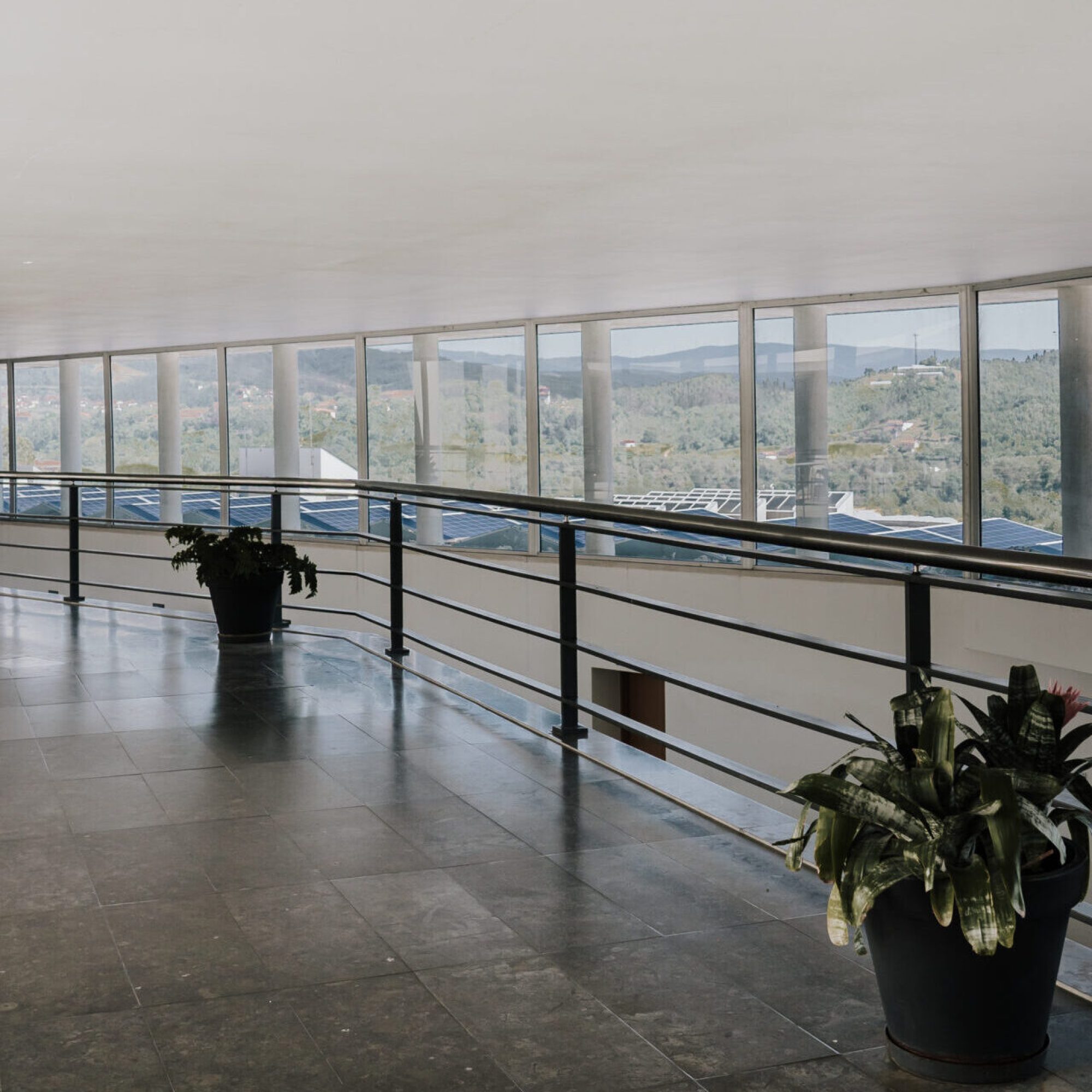
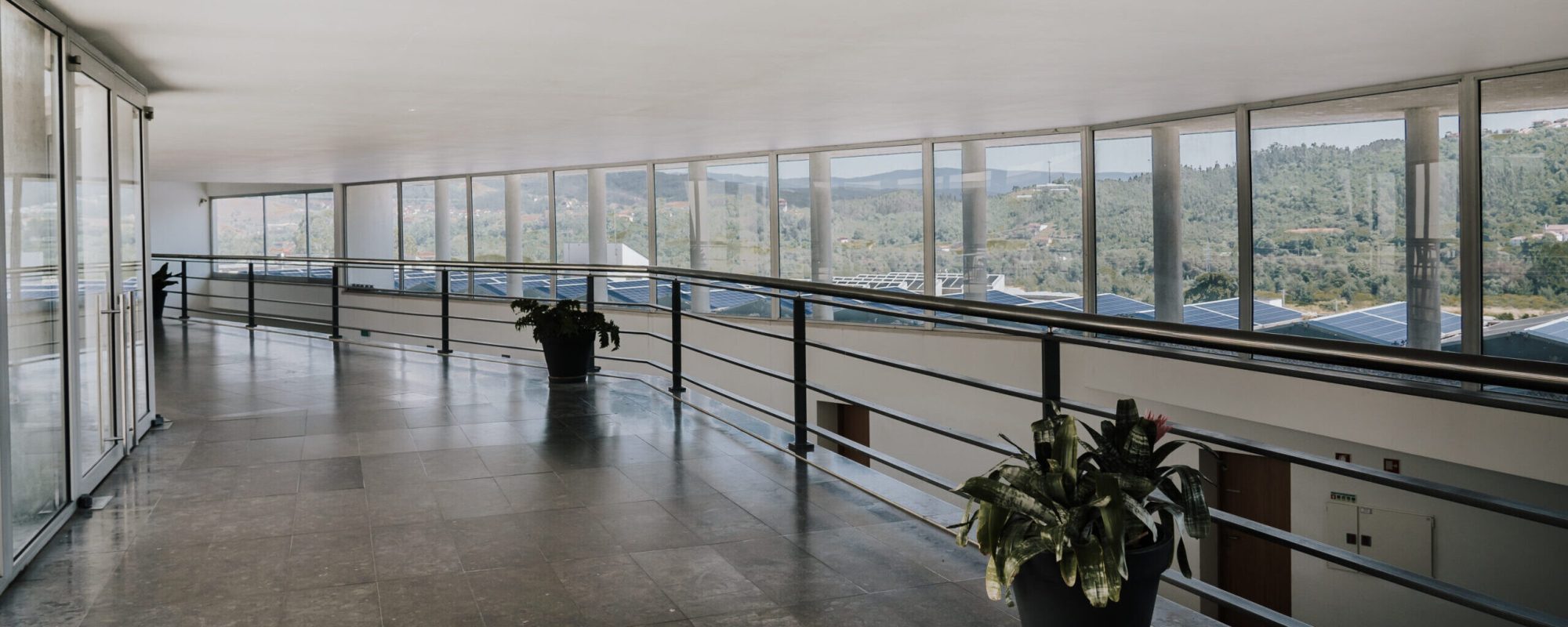
The Department of Electrical Engineering (DEE) moved into its building at Polo II at the beginning of the 1996–1997 academic year. The size and quality of these new facilities, combined with the boost in R&D activities provided by the CIÊNCIA program, encouraged the implementation of profound functional reforms, which are still ongoing today.
In the 1997–98 academic year, a curricular reform of the Electrical Engineering degree was carried out. The resulting study plan came into effect in the 1998–99 academic year.
In 2000, the Department of Electrical Engineering undertook a restructuring of its postgraduate programs, which led to the creation of the Master’s Degree in Electrical and Computer Engineering and several postgraduate courses specializing in four areas: Automation and Industrial Informatics, Energy, Materials and Non-Destructive Testing, and Telecommunications.
As of May 30, 2001 (Order No. 11 486, *Diário da República* – 2nd Series), the Department of Electrical Engineering was renamed the Department of Electrical and Computer Engineering (DEEC).
In the 2007–2008 academic year — following the Bologna Declaration, signed in June 1999 by the Ministers of Education of 29 European countries to create a coherent, competitive, and attractive European Higher Education Area that promotes the mobility of students, professors, and graduates — the DEEC implemented a curricular reform of its study programs. This reform established the current structure of Electrical Engineering education at the University of Coimbra.
The former undergraduate degree was replaced by the Integrated Master’s in Electrical and Computer Engineering, structured in two modules: the first module, lasting three years, awards the Bachelor’s degree in Electrical and Computer Engineering Sciences, while the second module grants the Master’s degree, offering four specialization areas — Automation, Computers, Energy, and Telecommunications.
A Doctoral Program (3rd cycle) in Electrical Engineering Sciences was also created.
Today, the DEEC is composed of a group of young and dynamic faculty members committed to building a nationally leading school that is internationally recognized — both for the quality of its teaching and for the excellence of its research activities.
(*) Editorial Note:
The information on this page is based almost entirely on the text of the same title included in the departmental prospectus for the 1996–1997 academic year, written by Professor Carlos Artur Trindade de Sá Furtado. His work masterfully describes the genesis and evolution of the Department of Electrical Engineering (now known as the Department of Electrical and Computer Engineering) up to its establishment at the University of Coimbra’s Polo II campus in September 1996.
Apart from minimal updating edits, this text includes a brief reference to the most relevant events for the DEEC (formerly known as DEE) since its relocation to the University of Coimbra’s Polo II campus.
 EN
EN  PT
PT